
Views: 0 Author: Site Editor Publish Time: 2026-03-12 Origin: Site


Many buyers entering the offshore industry begin their search for mooring equipment by asking a simple question: what diameter should the chain be? While diameter is an important parameter, it is not the most critical factor when evaluating a Mooring Chain. The real determining element behind safe offshore station keeping is tensile strength. Tensile strength defines how much load a chain can withstand before failure, and it directly influences how the chain performs under harsh ocean conditions. Understanding how mooring chain tensile strength is defined, classified, and applied helps engineers and buyers choose equipment that supports reliable offshore operations without unnecessary overdesign.
Tensile strength refers to the maximum force that a chain can withstand before it breaks. In offshore mooring systems, this value determines whether the chain can handle the forces generated by wind, waves, and currents acting on floating structures.
Every link within the chain must share the load distributed across the mooring line. When tensile strength is sufficient, the chain maintains structural stability and continues to perform reliably even under heavy environmental loads.
The design of offshore mooring systems always accounts for extreme conditions. Storm waves, vessel movement, and operational loads all create tension forces within the chain. A chain designed with appropriate tensile strength ensures that these forces remain within safe operating limits.
In technical specifications, tensile strength often appears alongside other terms such as Minimum Breaking Load or Minimum Breaking Strength. These values represent the load at which a chain would ultimately fail during testing.
Minimum breaking load is used by engineers to calculate safety margins for offshore systems. The working load applied to the chain during normal operations must remain significantly lower than the minimum breaking load to maintain structural safety.
Understanding these values helps buyers compare chains accurately. Instead of relying solely on diameter, they can evaluate the real strength capacity of the product.
Tensile strength should never be evaluated in isolation. Offshore mooring systems consist of multiple components including anchors, connectors, buoys, and floating units. The chain must work within this entire system.
If one component is significantly stronger than the others, the system may still fail at its weakest point. Proper engineering design ensures that all components share compatible strength levels and safety margins.
Marine mooring chains are typically categorized into strength grades. These grades represent different levels of mechanical strength achieved through advanced steel production and heat treatment processes.
R3 grade chains were historically common in offshore mooring systems. Over time, stronger grades such as R4 and R5 were developed to support larger offshore installations and deeper water operations.
Modern offshore projects sometimes use R6 grade chains, which provide even higher tensile strength for extremely demanding conditions.
Although higher grades offer greater strength, they are not always necessary. Selecting an excessively strong chain may increase cost and weight without providing additional operational benefits.
Engineering teams usually determine the required grade based on environmental loads, water depth, and the size of the floating structure. The goal is to select a chain strong enough to handle expected forces while maintaining efficient system design.
Chain grades also reflect differences in steel hardness and fatigue resistance. Offshore mooring systems experience repeated loading cycles, which means chains must resist both tensile stress and long-term fatigue.
Balancing strength and durability ensures that the chain maintains reliable performance throughout its operational life.
Two chains with the same diameter may have very different strength capacities depending on the grade of steel used. Higher grade steel provides greater tensile strength without requiring a larger link size.
This allows engineers to design mooring systems that are both strong and efficient.
Heat treatment processes play a critical role in determining the mechanical properties of mooring chains. Proper heat treatment improves strength, hardness, and fatigue resistance.
Manufacturing technology also influences chain performance. Precise welding processes and strict quality control ensure that every link meets the required mechanical standards.
Zhengmao Group Co., Ltd., originally known as Zhenjiang Anchor Chain Factory, has been producing high-strength chains since 1974. The company uses advanced flash-butt welding technology to manufacture anchor chains and mooring chains that meet demanding offshore specifications.
Every mooring chain used in offshore applications must undergo rigorous testing. Tensile tests verify that the chain meets required breaking strength levels, while additional inspections confirm dimensional accuracy and structural integrity.
Certification from recognized classification societies ensures that the chain complies with international marine standards.
Offshore structures such as floating production systems rely on mooring chains to maintain stable positioning. Environmental forces constantly act on these structures, creating tension within the mooring lines.
Chains with adequate tensile strength ensure that these forces are safely distributed without risking structural failure.
Engineers design mooring systems with safety margins to account for unexpected conditions. The minimum breaking load of the chain must remain significantly higher than the expected working load.
This margin provides additional protection during storms or extreme environmental events.
Tensile strength also influences how the chain performs over long periods. Offshore chains experience repeated loading cycles that can gradually weaken the metal structure.
Chains designed with sufficient strength and durability maintain reliable performance even after years of exposure to harsh marine environments.
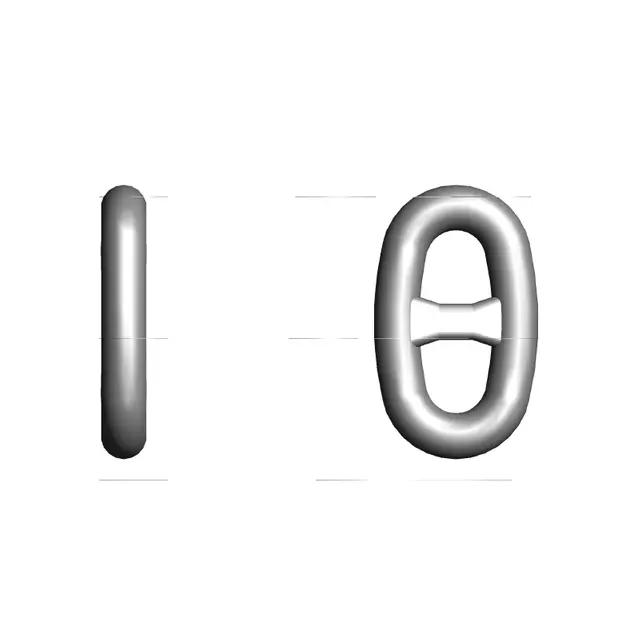
Different offshore applications place different demands on mooring chains. Floating production storage units, offshore buoys, and deepwater platforms each require specific mooring configurations.
Understanding the application helps determine the appropriate chain strength.
The working load of a mooring system must remain well below the chain’s minimum breaking load. Engineers calculate this ratio to ensure safe operation.
Buyers should evaluate chain specifications within the context of these design calculations.
Offshore mooring chains must meet strict classification standards. These standards define mechanical properties, testing procedures, and quality requirements.
Chains manufactured under certified production systems provide greater confidence in their reliability.
Operational conditions influence how the chain will age over time. Chains exposed to strong currents, corrosive seawater, or heavy loading cycles may require higher strength grades or additional maintenance planning.
Suppliers capable of producing multiple chain grades and sizes offer greater flexibility for offshore projects. This range allows engineers to select chains that match specific design requirements.
Reliable manufacturers invest heavily in testing facilities and quality control systems. Mechanical testing, dimensional inspection, and traceability procedures ensure consistent product performance.
Experience with offshore installations demonstrates a manufacturer’s ability to deliver reliable chains for complex mooring systems.
Zhengmao Group Co., Ltd. has developed a comprehensive manufacturing system capable of producing a wide range of mooring chains and anchor chains. With an annual production capacity reaching approximately 120,000 tons, the company supports global offshore projects with durable chain solutions designed for demanding environments.
Floating production systems rely on mooring chains to maintain position in deep water while allowing controlled movement. High-strength chains are essential for handling the environmental forces acting on these large structures.
Single point mooring systems allow tankers and offshore units to rotate around a central buoy while remaining anchored in position. Chains used in these systems must withstand continuous loading and environmental stress.
Each offshore application requires a specific balance of strength, durability, and flexibility. Engineers analyze environmental forces, water depth, and system configuration to determine the most appropriate chain grade.
Grade | General Strength Level | Typical Application Focus | Buyer Note |
R3 | Standard offshore strength | Early offshore systems | Suitable for moderate loads |
R4 | Higher strength | Modern offshore mooring | Common in many projects |
R5 | Very high strength | Deepwater installations | Supports larger structures |
R6 | Extreme strength | Advanced offshore systems | Used in demanding environments |
Understanding tensile strength is essential when selecting equipment for offshore mooring systems. While diameter provides a basic reference point, true chain performance depends on strength grade, manufacturing quality, and the operational environment in which the chain will work. Engineers must evaluate tensile strength alongside certification standards, safety margins, and long-term durability to ensure reliable station keeping. When these factors are considered together, the selection process becomes clearer and the performance of the offshore mooring chain system becomes far more predictable.
For more information about high-strength marine chains designed for offshore projects, contact Zhengmao to explore reliable mooring chain solutions that support safe and efficient offshore operations.
Tensile strength refers to the maximum load that the chain can withstand before breaking. It is usually expressed through values such as minimum breaking load.
Chain grade determines the mechanical strength of the steel and its ability to handle environmental forces in offshore conditions.
Yes. Chains with the same diameter may have different tensile strengths depending on their material grade and manufacturing process.
They are widely used in floating production systems, offshore buoys, deepwater platforms, and single-point mooring systems where strong station keeping is required.


